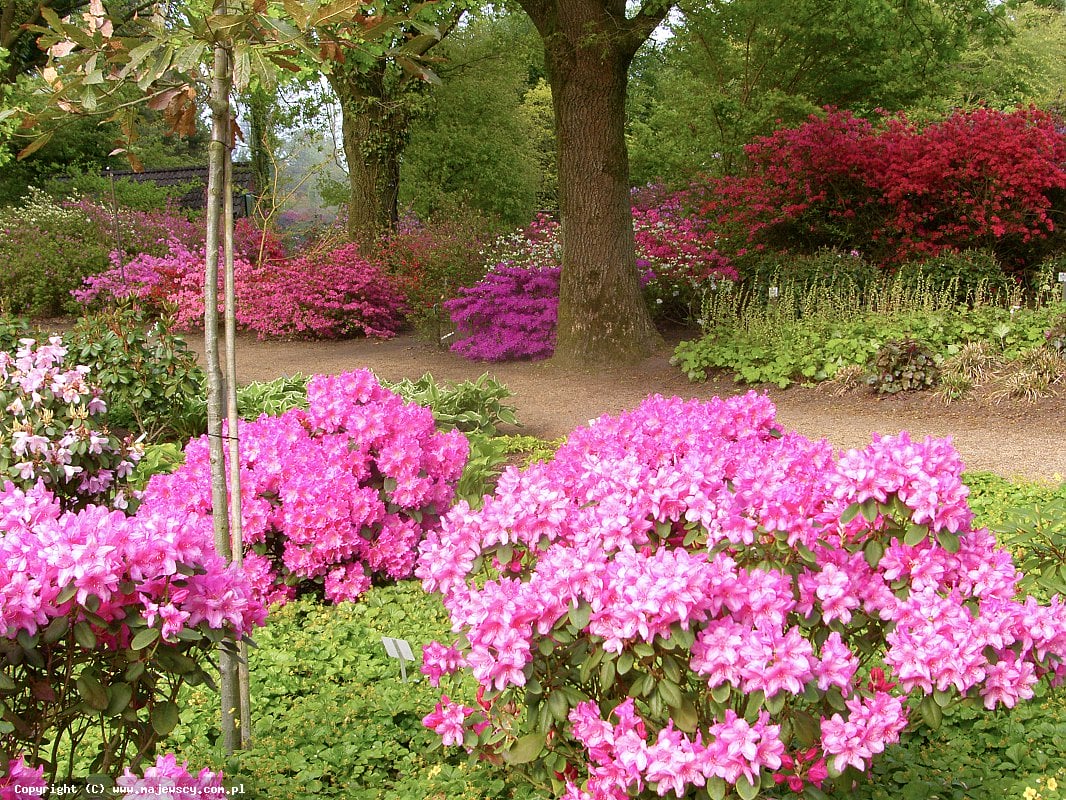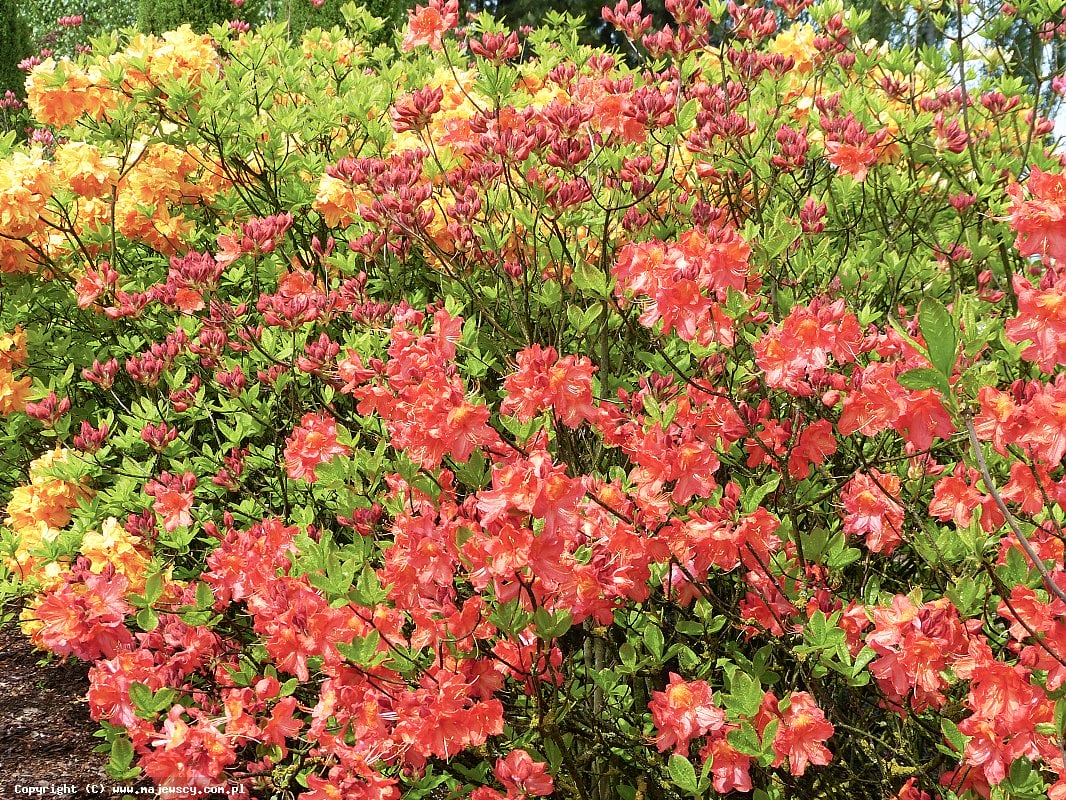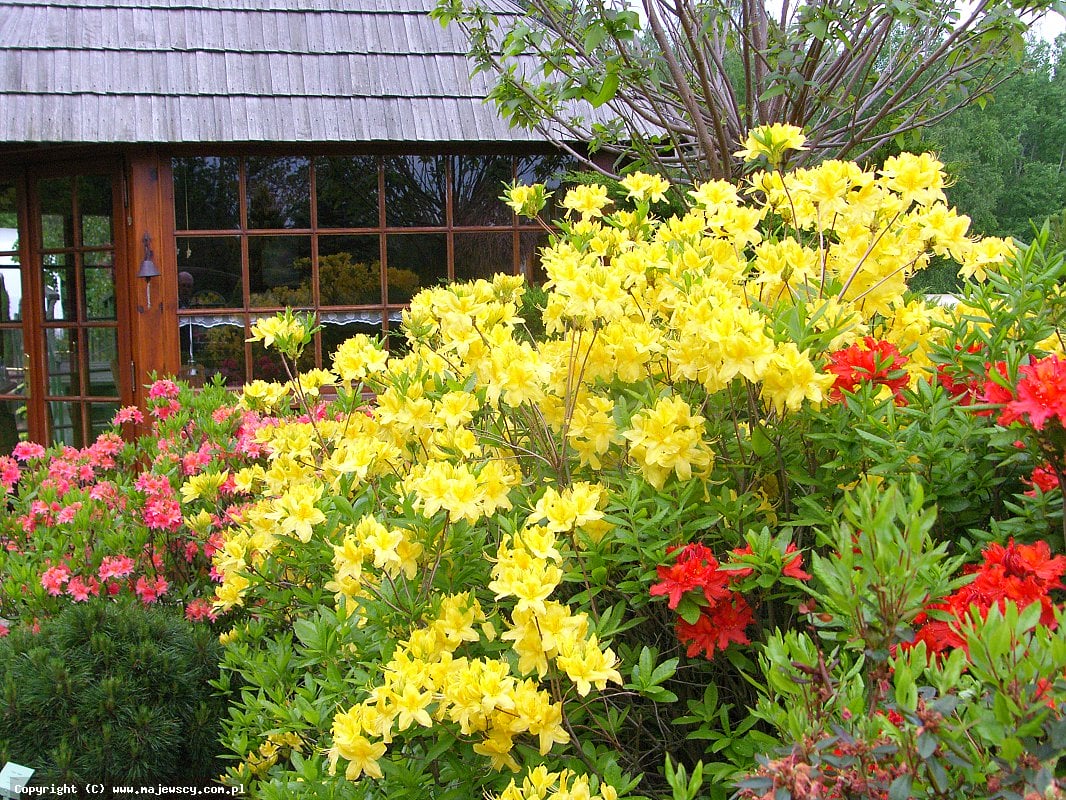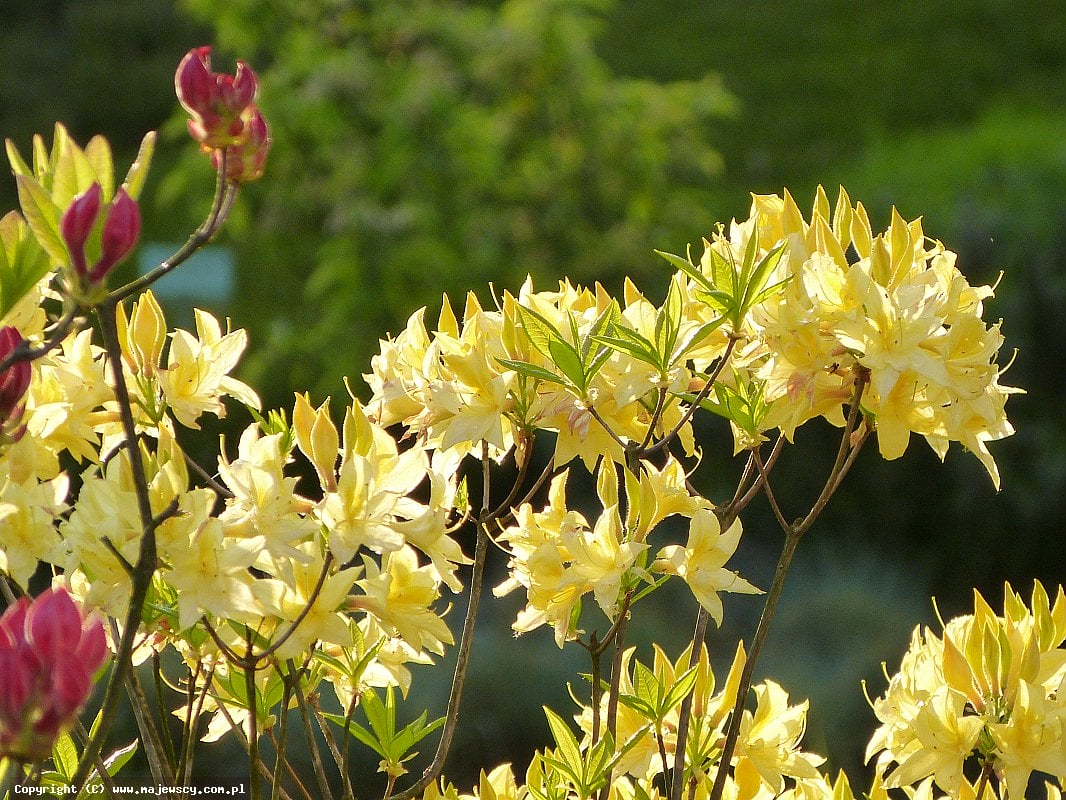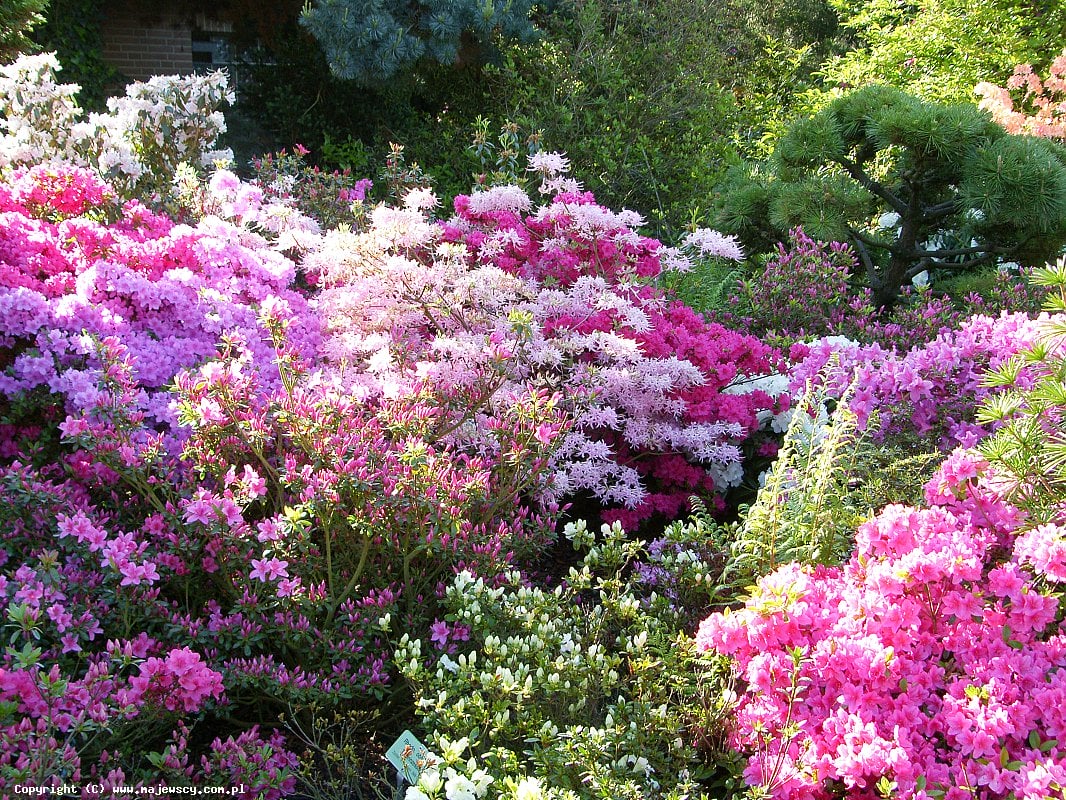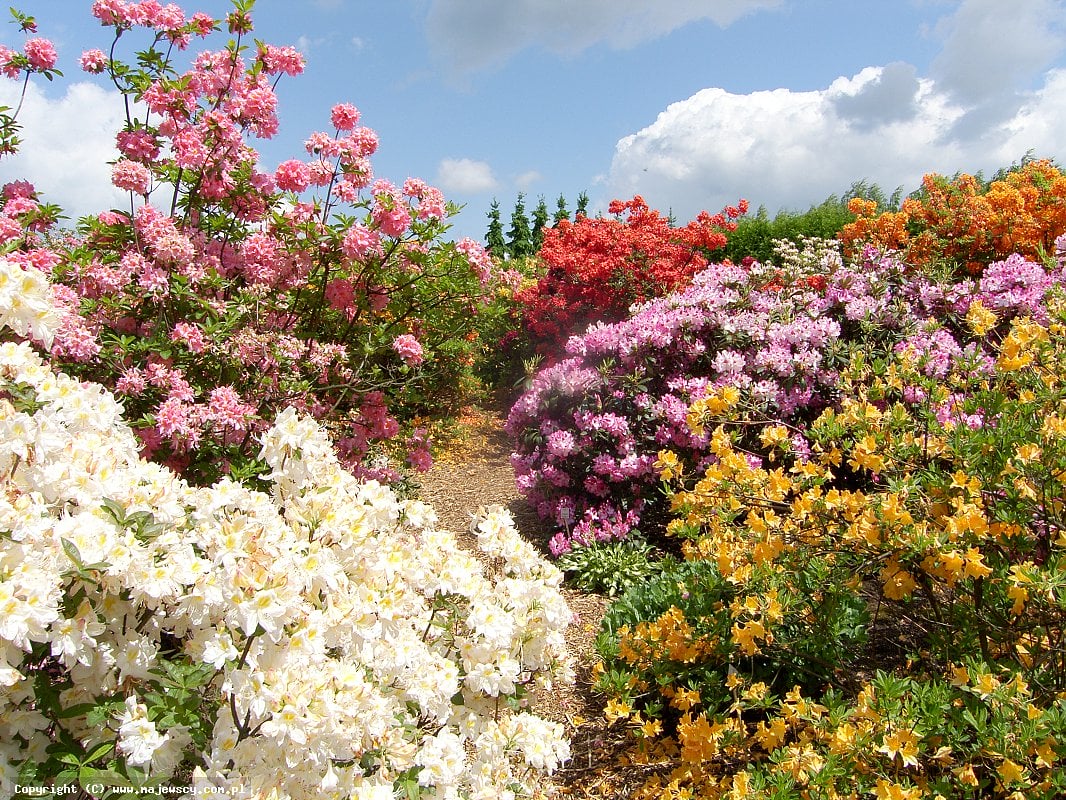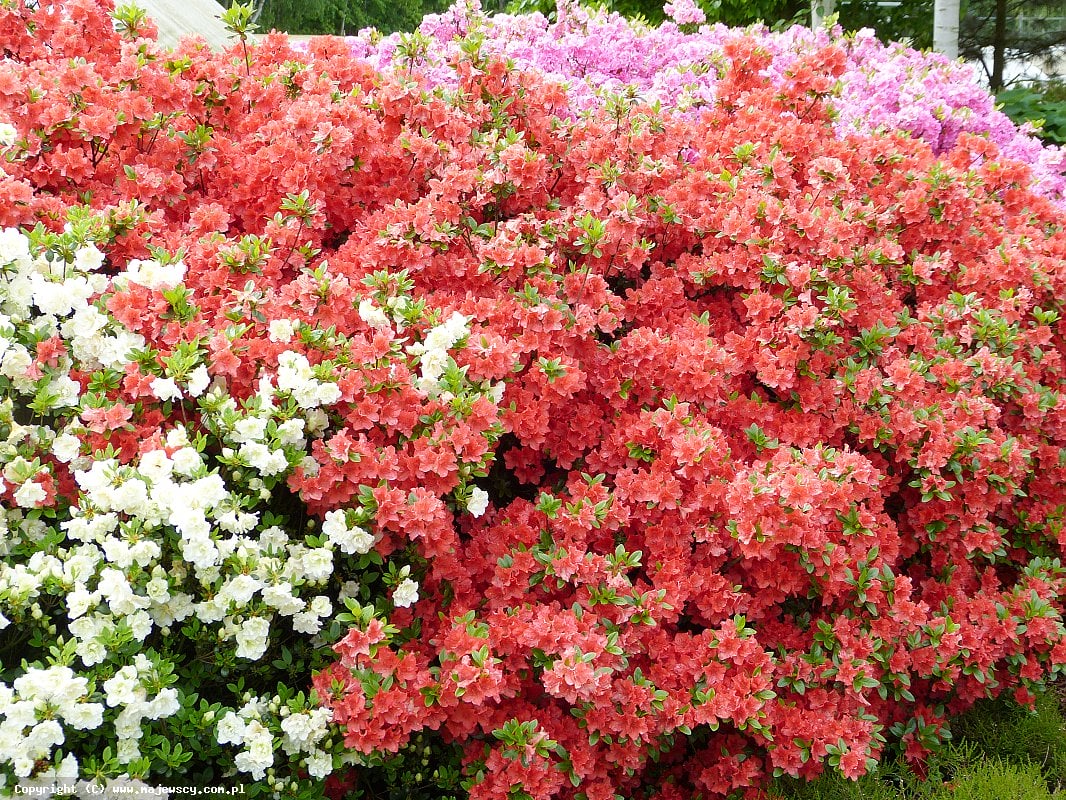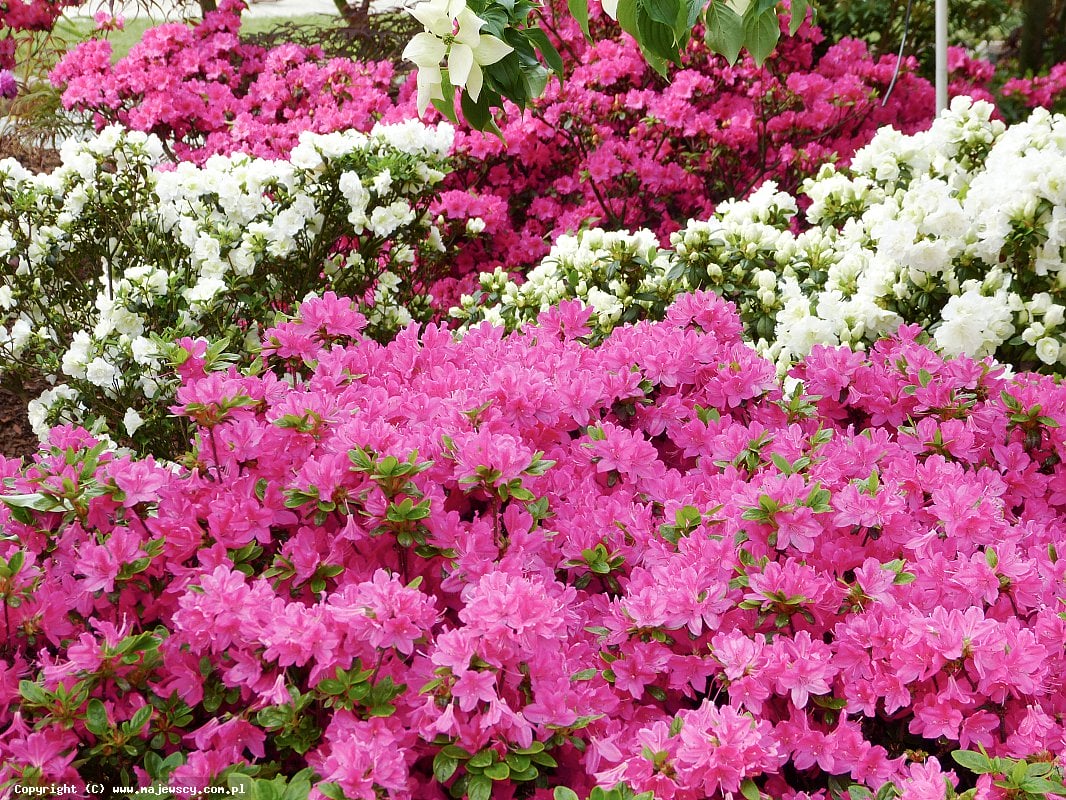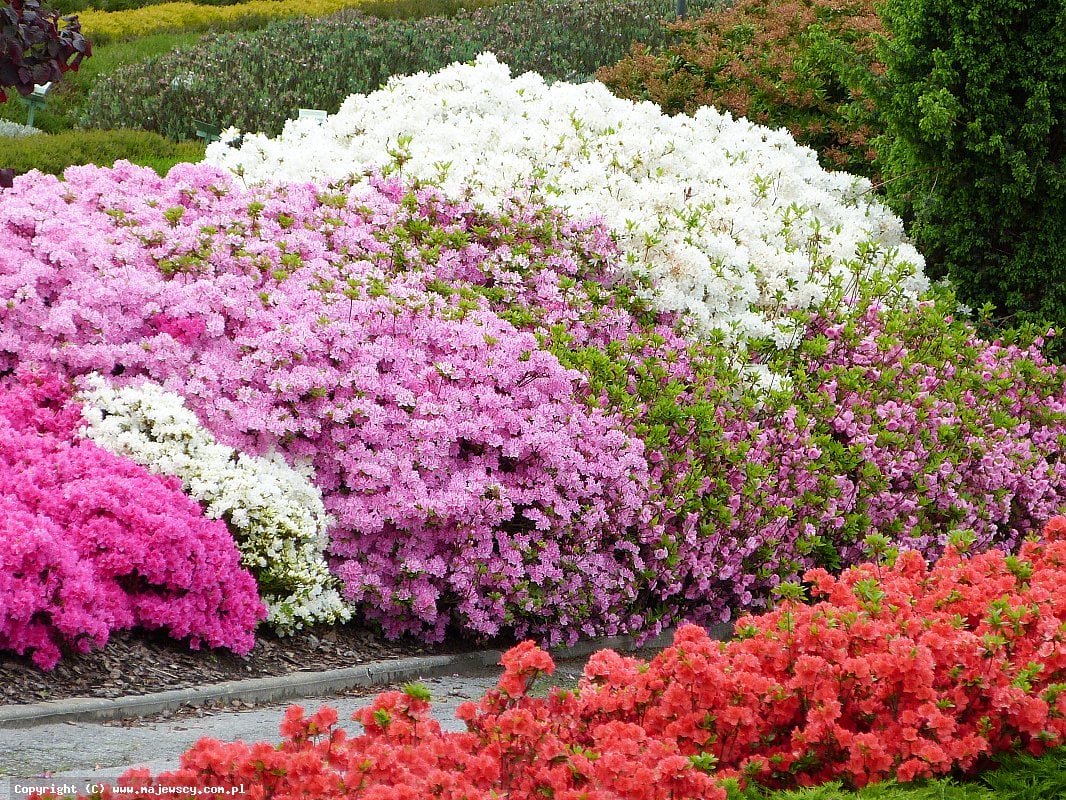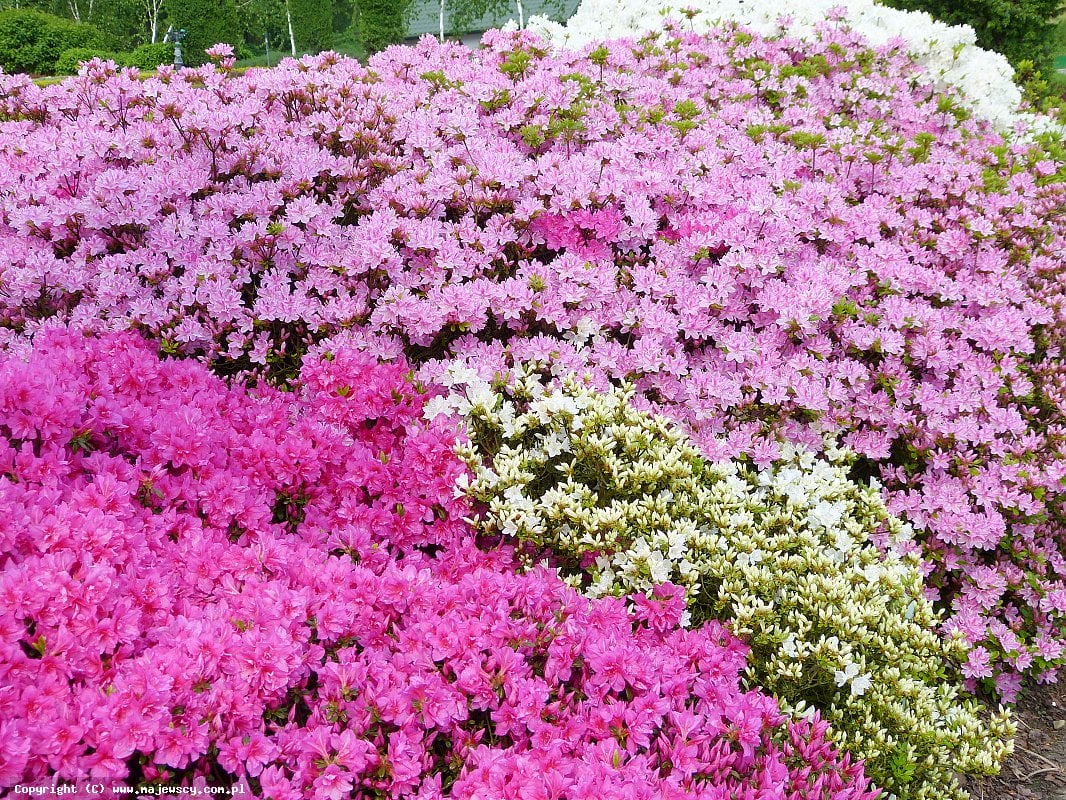


The name “azalea” and “Japanese azalea” are in colloquial speech only; and it defines them as shrubs, adherent to the genus Rhododendron: which is part of the heather family. The most important requirement for this family is that they need an acidic soil (pH 3. 5-4.5).
Azaleas are plants that drop their leaves in autumn, and this helps them to survive the winter and spring ground frosts. Modern varieties of azaleas are hybrids of pontine azaleas, crossed together with many North American species. One of its characteristics is the huge scope and multitude of varieties. The basic colours are white, orange, red, and pink: as well as many other different shades. Individual shrubs bloom, usually lasts 2-3 weeks. To obtain the best effect in your garden, you need to organize your planting, so that the different timing of blooms lets you see the best results: which you can view from the middle of April until June. In October, the azalea leaves cover most of the exquisite colours of autumn, from yellow, orange, to a purplish red. Shrubs without covering, winter very well, though very sharp frosts, can damage floral buds. Azaleas shrubs are slow growers. After ten years growth (dependant on which variety) they can achieve about 1.5 m in height and diameter. Japanese azaleas are low evergreens or half-evergreens, and their height does not usually exceed 100 cm. They create an exquisite carpet of inflorescences, in many shades of pink, reddens, violet, as well as white. The abundance and variety of ( the )inflorescence colours means, that they are a perfect supplement for a composition of azaleas; as well as being an indispensable part of a Japanese garden, Heathers garden, and low and dwarf conifers gardens. With Japanese azaleas, it is advisable to cover them before winter with conifer branches, or double the layer of horticultural shading fabric. There are many possibilities in the garden for the azaleas use. They can grow in the direct sun, as well as in the shade. Azaleas and Japanese azaleas look very splendid arranged in multicoloured groups. Planting in a bigger numbers, can create a superior effect. One way of presenting azaleas, is to use coniferous trees and shrubs in large groups in the background. In the foreground, we can plant medium perennials, low coniferous trees; or different varieties of heathers, e.g. heathers or heath. The banks of water reservoirs are the ideal position for groups of multicoloured azaleas. The reflection on the surface of the water multiplies the effect, and creates an idyllic atmosphere. From the perspective of the landscape designer, azaleas through practice are an excellent plant used in wooden planting boxes, or in many assortments of display pots either for the terrace or for balcony.
All heather plants require acid and permeable soil. In most gardens, we find that this is not the case, and so we have to take care to create the optimum growing conditions for these plants. The correct method for planting azaleas is as follows; for an azalea, we need to prepare a hole about 70-80 cm in diameter and 30-40 cm deep, and for Japanese azaleas suitably 40-50 cm in diameter and 25-30 cm deep. If the soil is too heavy and water has a tendency to accumulate, then you should prepare a deeper hole and look at the feasibility of drainage. You can use either gravel, keramzyt or for example, old broken clay flower pots. Now we need to move on to the preparation of soil for planting. We recommend that you mix an acid peat with your existing soil to a pH not exceeding pH < 4.5-5.
Before planting, the plant needs to have a good watering. Place the plant and container in water for a few minutes. After we have planted the plant, we should not tamp down the area around the root ball, but instead let the soil find its own level with watering; so that we have a final depth of 3 -5 cm below the level of soil. As heathers have a shallow root system, it can be beneficiary to cover the ground with conifer bark. This practice will limit the growth of weeds, and the drying of the top soil: which will also result in the slow production of an acidic soil. To obtain the best effect of “carpeting”, this depends on the density of planting. To gain this effect with azaleas, we recommend that the spacing should be no more than 1-1.5 m apart, and in the case of Japanese azaleas, 0.5-0.7 m. It is possible to plant azaleas more densely to gain a quicker and more desirable effect, remembering that next summer; you may need to transplant some of them. One should remember that the more azaleas you plant, the larger the effect is.

Azaleas and Japanese azaleas dislike excessive moisture, which if not heeded, can result in the deterioration of the plant. On the other hand, we cannot under-water; therefore, it is recommended, that azaleas should be watered moderately: either in the morning or evening from pond or rainwater.
Pruning is not required for azaleas. The only pruning required is to remove dead or deceased parts. In azaleas case we recommend that, you should deadhead the inflorescences, which will benefit next years blooming.
It is important that in the spring, azaleas should receive fertilizers, which are recommended for acidophilic plants. One application of a slow release fertilizer will gain the best results. It is well to note that azaleas react badly to excessive salty ground, which is a result of over fertilization: therefore, if you are not confident of the amount, it is better to reduce the quantity. Plants should not receive fertilizer with high nitrogen content after mid July. Fertilizer should be sprinkled under plant folia; because accidental dust spillage, can lead to a burning of the leaf. If this happens, then immediate rinsing of the plant should take place. Fertilizer should not be sprinkled at the azaleas centre, about 20-30cm distance from the centre.
Opuchlak truskawkowiec, which attacks azaleas, is the most common pest. This small beetle after feeding leaves a semi-circle
hole on the leaf. Its larva causes larger damage, feeding on the root and neck; which leads to the eventual death of the plant.
First evidence of this can be witnessed towards the end of May. If you find that your plant becomes invested; we recommend that
every 7-10 days you should spray with a mix of Fastac or Decis or a similar spray, which is designed to destroy the Colorado
beetle. This procedure should be repeated three times. One biological method is also to apply nematode Larvanem. The most
common disease that can affect the young shoots and leaf of the azaleas, is the powdery mildew. Powdery mildew is a fungus that
emerges in a white powdery form, which can be noticed from July until autumn. To limit the spread of the fungus, it is recommended
that you should remove and burn all diseased plant material; and then spray with a preparation of: Score 250 EC, Discus 500,
Nimrod 250 EC, Saprol 190 EC or a biological preparation: Biosept33 SL or Bioczos.
We have outlined the main problems with azaleas here, but we also recommend that you seek professional literature and advice.